How Can eCommerce Brands Use RCS Campaigns for Better Sales?
Most e-commerce stores use the exact same tactics. Text messages for order confirmations, emails for marketing, and push notifications for abandoned cart recoveries. The issue is not with the tactic but with its implementation. Text messages have no branding whatsoever and cannot be interacted with. Emails have an open rate of only 20%. And push notifications are ignored.
The customer’s messaging inbox remains untapped by the brands, even when it is the most-used application on their mobile device. Everything changes with RCS , and the eCommerce brands that have utilized RCS have already begun to see successes unmatched by any other media channel.
Understanding RCS Messaging
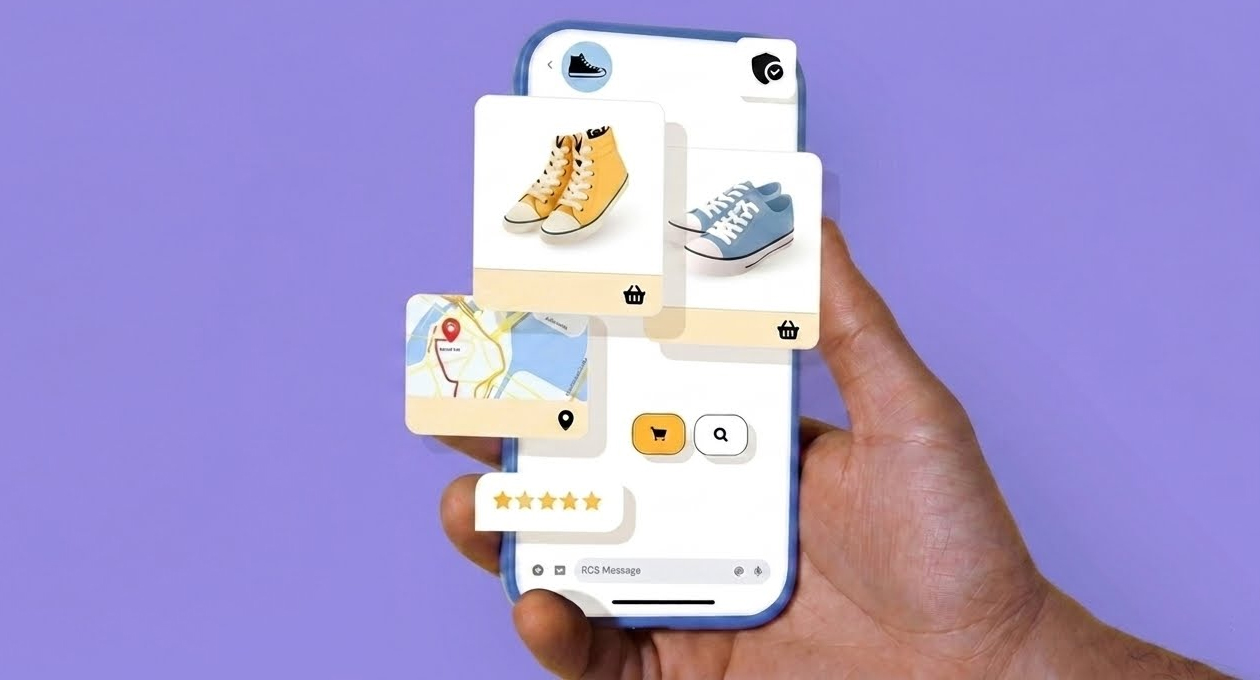
RCS sends messages via the customer’s own messaging application, equipped with features that were never possible with SMS:
- Brand name and logo verification before the customer even opens the message
- HD images and videos
- Product carousel allowing the customer to swipe through products, functioning almost like an online store
- Interactive CTA buttons and quick-reply buttons are included within the message.
- Delivery, open, and read receipts are available for every message sent
- Ability for two-way communication with the customers
Identity verification of the sender itself becomes a key factor in conversion. The consumer who sees their favorite brand's name and logo before reading the first letter in their inbox will be in a different mental state from the consumer who receives an anonymous code via text message.
Benefits of RCS Campaigns for eCommerce
RCS gives eCommerce brands a communication advantage that every other channel has so far been unable to deliver at the same cost and scale.
- Higher engagement: Verified brand identity and rich visuals make customers significantly more likely to open, read, and act on RCS messages compared to plain SMS
- Faster conversions: Interactive buttons and one-tap purchase flows remove every step between seeing an offer and completing a purchase
- Better personalization: Dynamic variables and customer segmentation allow each message to feel individually relevant rather than mass-broadcast
- Reduced cart abandonment: Product images and direct checkout buttons inside the message recover orders that SMS links consistently fail to convert
- Full audience reach: With iOS 18 adding RCS support, campaigns now reach both Android and iPhone users through a single send.
- Measurable performance: Real-time delivery, open, and read receipts give brands accurate campaign data that SMS cannot provide
- Brand trust at first glance: The verified sender badge and logo build credibility before the customer reads a single word
Ways eCommerce Brands Can Use RCS Campaigns
Personalized Promotions Based on Purchase History
Promotional blasts tend to generate very little response because of their irrelevance to most people. RCS allows e-commerce businesses to make offers based on an individual's activity, including purchase history, browsing habits, and product categories.
The customer who purchased running shoes recently will receive an RCS message that includes a carousel of running gear, a personalized discount offer, and one-tap access to “Shop Now.” This message feels more curated than mass-broadcasted, which is crucial for conversion.
Interactive Product Catalogs in the Messaging Inbox
With RCS, the messaging becomes a shopping experience that allows users to browse without having to leave the inbox. Through swipeable carousels that have high-quality images of products, prices, and direct links to purchase them, shoppers can browse through a product line just like they would while browsing online.
Abandoned Cart Recovery That Actually Converts
Abandoned cart recovery campaigns have the highest return rates in eCommerce marketing if the channel is used properly. Many people actually like getting abandoned cart reminders through RCS more than SMS or MMS messages, especially due to the features available in RCS.
When an abandoned cart reminder comes through RCS, the customer sees a full product view along with their total cart value and the “Complete Purchase” button.
Flash Sale Alerts With Built-In Urgency
A flash sale that is not seen by the customer after it is over is a lost opportunity for making a sale. The flash sale notifications of the RCS feature attractive visual effects, a countdown timer, and buttons that encourage taking action.
The major difference between SMS and push notifications is that the offer will be presented immediately in a branded and interactive way. The customer won't have to open a link, browse through the site, and finally find the offer. The offer itself will be contained in the message and a click away from purchase.
Loyalty Program Engagement and Win-Back Campaigns
Loyalty program messages are the most personalized type of brand communication since they explicitly acknowledge the effort the customer has made. RCS-based loyalty programs can include features such as live point balances, exclusive deals from a swipeable carousel, and one-tap redemption buttons embedded in the message.
In terms of win-back programs aimed at customers who have stopped engaging, RCS enables a level of engagement that is not possible via plain-text SMS.
Order Tracking and Post-Purchase Communication
Customer experience after purchase is where most eCommerce companies fail to deliver. A confirmation message followed by no contact until delivery does not constitute a customer experience. It is simply an anxiety gap.
An RCS post-purchase flow delivers:
- Branded order confirmation message with pictures of products, along with an expected delivery date, soon after placing the order
- Dispatch notification message with live tracking link when the order is dispatched
- Out for delivery message with a delivery time window on the same day
- Delivery confirmation message with a one-tap feedback/reorder feature
Challenges and Things to Consider for RCS Campaigns
RCS campaigns deliver strong results, but entering the channel without preparation leads to avoidable mistakes.
- Verification takes time: RCS Brand Agent approval through Google and carriers takes a minimum of four to six weeks for a complete submission, so campaigns cannot go live overnight.
- SMS fallback is mandatory: Not every customer's device or carrier supports RCS yet, meaning every campaign needs a properly configured SMS fallback to guarantee delivery
- Rich media requires production effort: HD images, product carousels, and banner assets need to meet specific size and resolution requirements, adding a creative production step that SMS does not require
- Audience segmentation is non-negotiable: Sending the same RCS message to every contact wastes the channel's personalization capability and drives opt-outs faster than a targeted approach would
- Opt-in compliance applies: Like SMS, RCS campaigns require explicit customer consent before sending promotional messages, and opt-out requests must be honored immediately
- Cost per message is higher than SMS: Campaign budgets need to account for the higher per-message cost, even though the return on spend consistently justifies it at scale.
None of these challenges is a reason to avoid RCS. There are reasons to work with a partner who has already navigated them.
The Bottom Line
Customers are not ignoring eCommerce brands because they are no longer interested in purchasing. What they are ignoring are communications that simply look like any other message among a pile of emails. With RCS, eCommerce brands can distinguish themselves through unique visuals and interactivity when the customer needs to make that all-important purchase decision.
At RCS Brand Rise, we assist eCommerce brands in India in designing and executing an array of RCS campaigns ranging from verified sender registration, product carousel templates, automated abandoned carts, flash sale campaigns, loyalty program messaging, and delivery analytics. In doing so, we enable brands to reach out to every consumer on their smartphones, whether Android or iPhone, in a compelling manner that translates into sales.
Frequently Asked Questions
Q: Do RCS campaigns reach iPhone users or only Android users?
Both. Apple added RCS support with iOS 18, meaning RCS messages now reach Android and iPhone users through their native messaging apps.
Q: How is an RCS abandoned cart message better than an SMS?
RCS shows product images, the cart total, and a one-tap purchase button inside the message. SMS can only include a link. The RCS format removes the friction between seeing the reminder and completing the purchase.
Q: Can RCS product carousels link directly to product pages?
Yes. Each card in a product carousel can carry a direct URL to the specific product page or checkout, making the path from message to purchase as short as possible.
Q: Is RCS more expensive than SMS for eCommerce campaigns?
Per the message, RCS costs slightly more than SMS. Given the significantly higher engagement rates, click-through rates, and conversion rates documented across campaigns, the return per rupee spent is consistently higher than SMS for campaign-based communication.

We are restructuring the way the business in Delhi interacts with the customers at RCS Brand Rise. We are the market leader and the RCS provider of Delhi in India, specialised in smarter, richer, and more interactive messaging.
Quick Links
© 2025 RCS Brand Rise. All Rights Reserved.